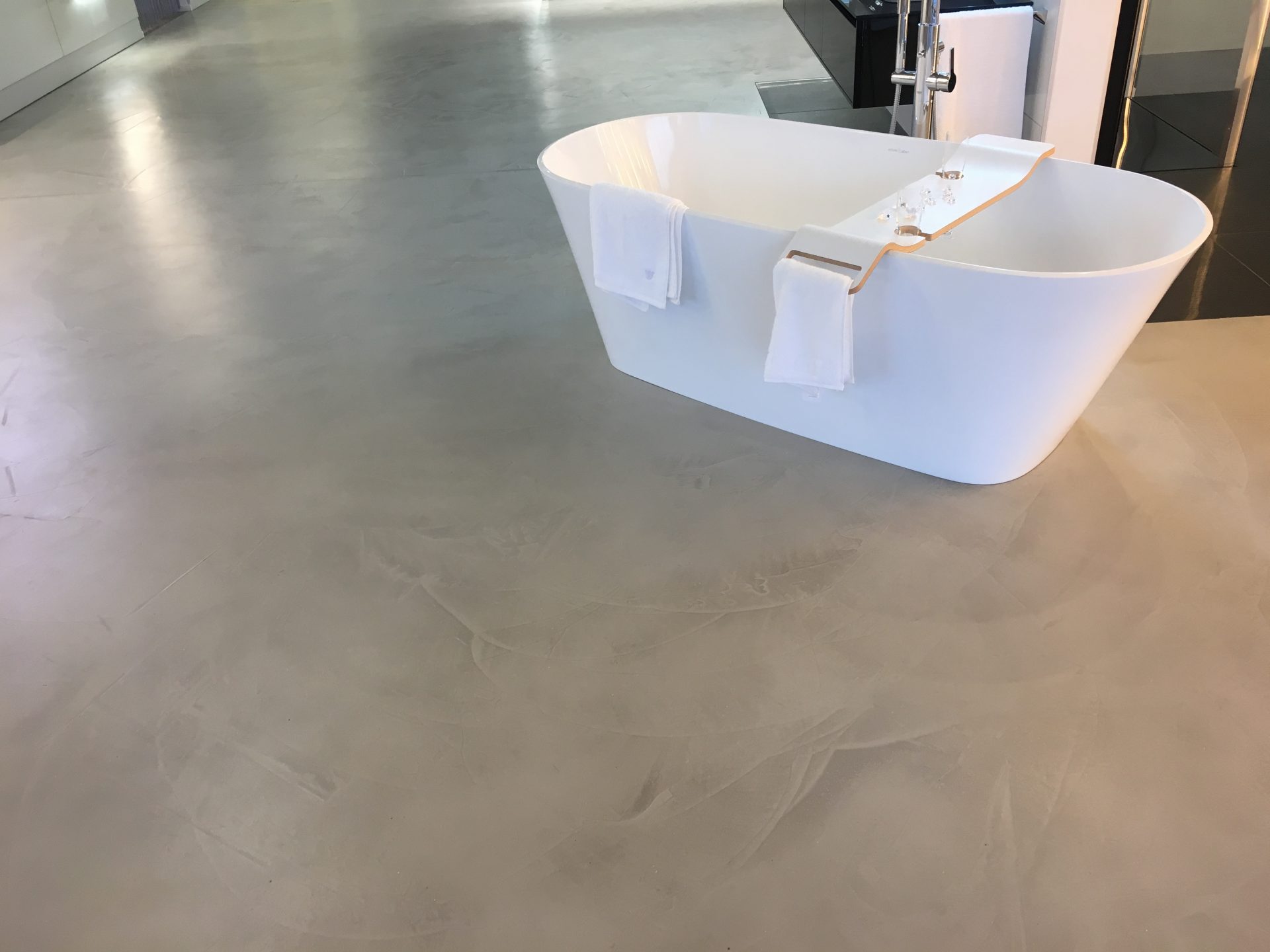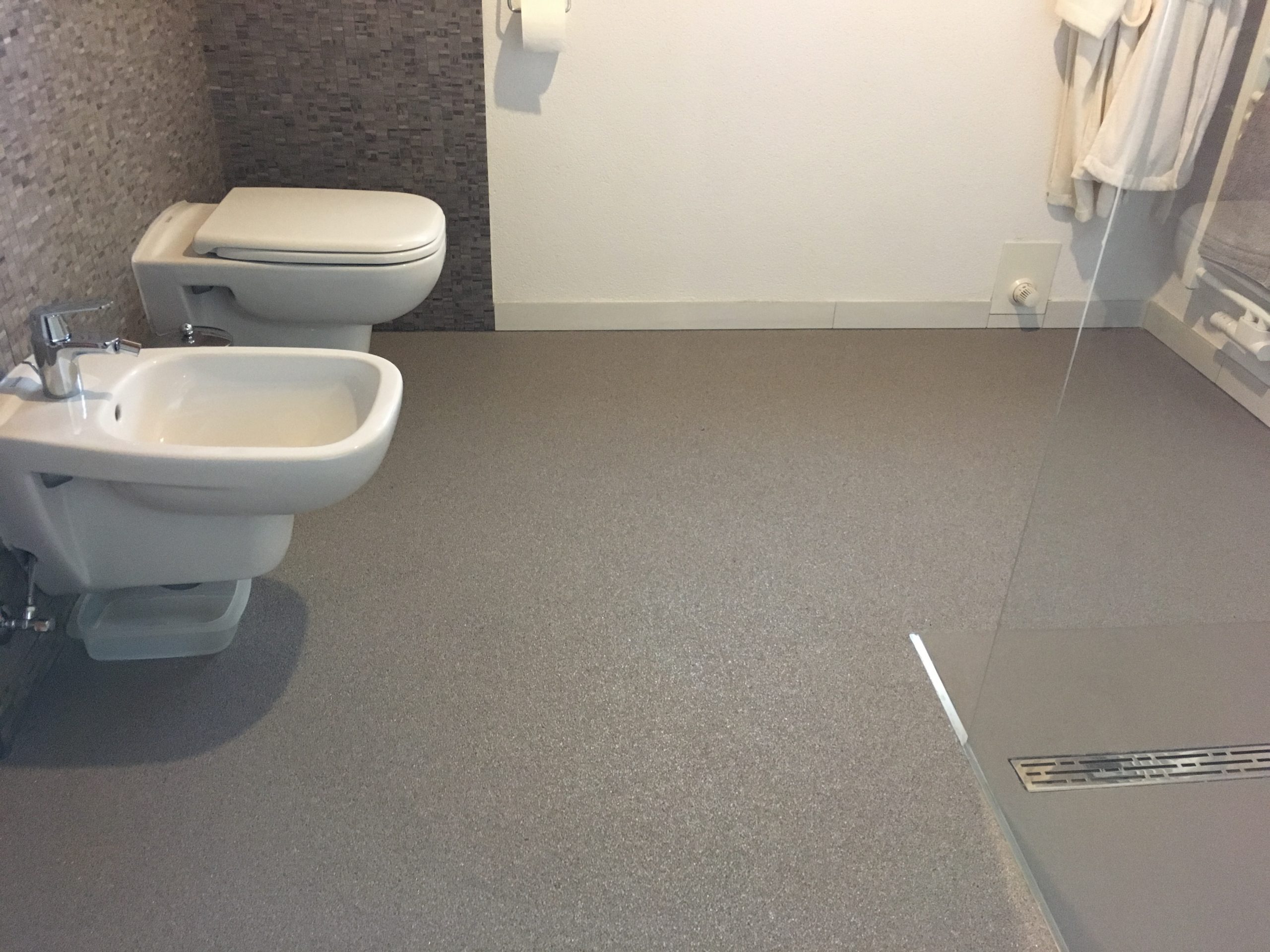
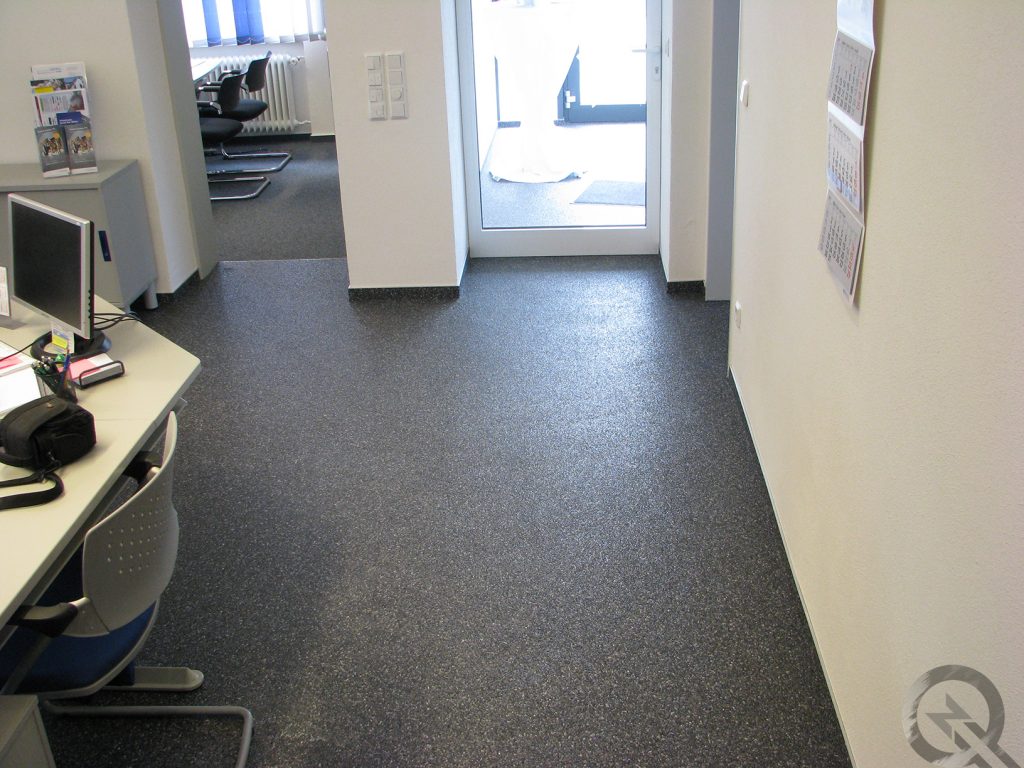
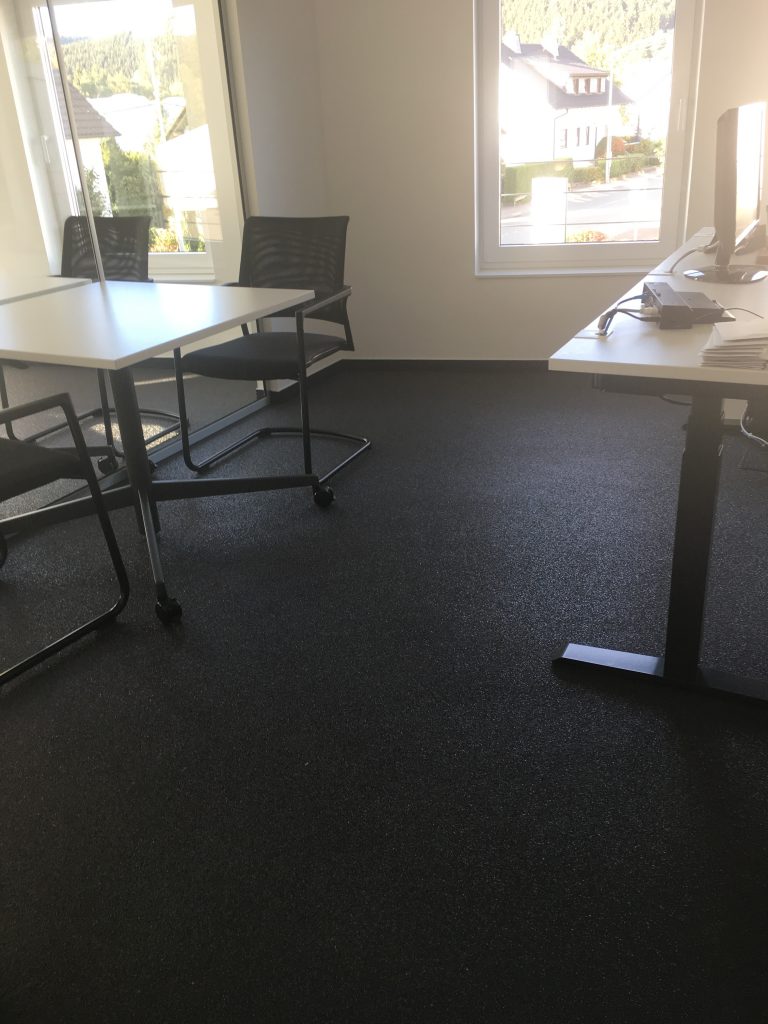
The use of stone carpeting in offices offers a number of advantages. Firstly, stone carpet is extremely hard-wearing and durable. It can withstand many of the stresses and strains that can occur in everyday office life, such as the high volume of traffic or the use of office chairs. Stone carpet is also very easy to clean and hygienic. It is easy to clean and disinfect, which is a particularly important factor in today’s world.
The advantages of stone carpeting in offices Good reasons to renovate your office
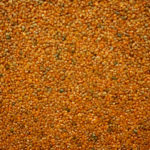
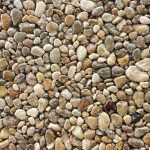
Stone carpet is a modern and attractive type of floor covering that has become increasingly popular in recent years. It is a seamless, hard-wearing and easy-care floor covering consisting of natural gravel and special binders. The floor covering is suitable for many different areas of application and is also an interesting alternative to classic floor coverings such as carpet or tiles in offices.
hygiene
One advantage of stone carpeting is its ease of maintenance and hygiene. In offices, floors need to be cleaned regularly to ensure the health of employees and the cleanliness of rooms. Stone carpet is easy to clean
Freedom of design
In addition, stone carpet is extremely versatile and can be produced in many different colors. This means that the floor covering can be perfectly adapted to the individual needs and corporate design of the respective company. The design possibilities are virtually unlimited.
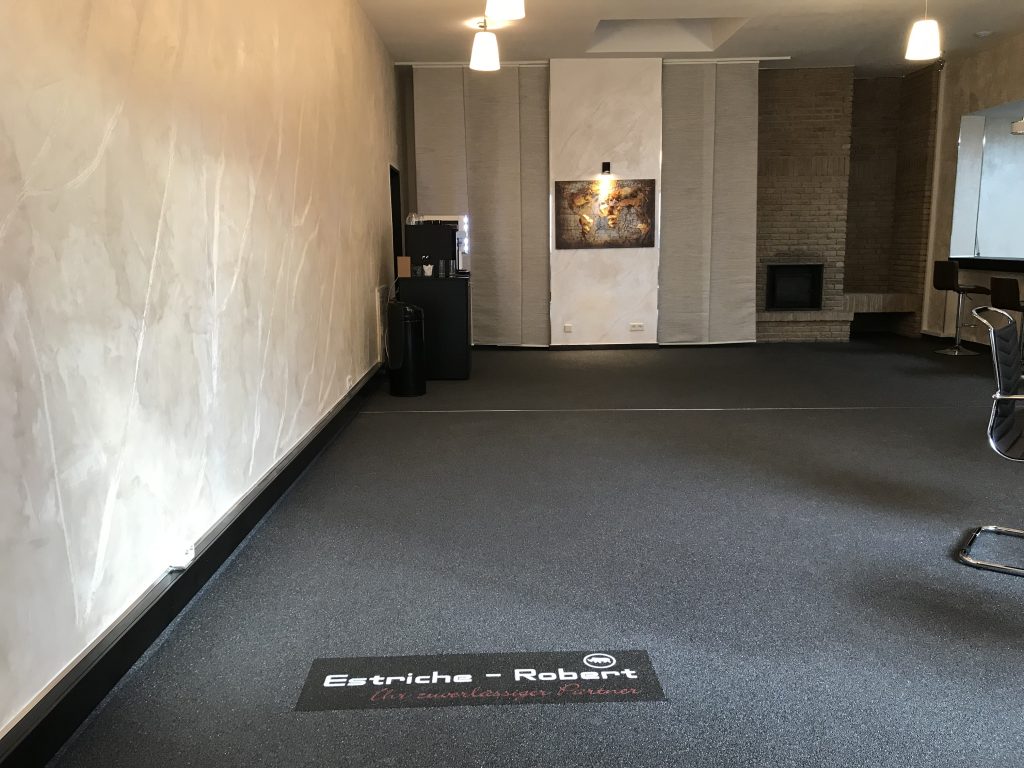
Stone carpet can also be used as a creative design element to make the office floor a real eye-catcher. For example, the company logo can be integrated into the floor covering or different motifs and patterns can be combined.
These Qubo® Painting motifs are created in the sz art of airbrush studio prior to the construction project and are manufactured using the same material as the office floor. The motifs are extremely abrasion-resistant and are therefore also suitable for the integration of logos in garages.
Haptics
Another advantage of stone carpet is that it is pleasant to the touch. In contrast to hard floor coverings such as tiles or laminate, a stone carpet feels softer and more pleasant to walk on. This can be an important factor for the well-being of employees, especially during long periods of standing or sitting in the office.
Sound insulation
Stone carpeting also has a sound-absorbing effect and can therefore help to reduce the noise level in the office and create a pleasant working atmosphere. The reason for this is the stone structure, in which the sound is refracted instead of being completely reflected back into the room.
The many advantages speak in favor of stone carpeting
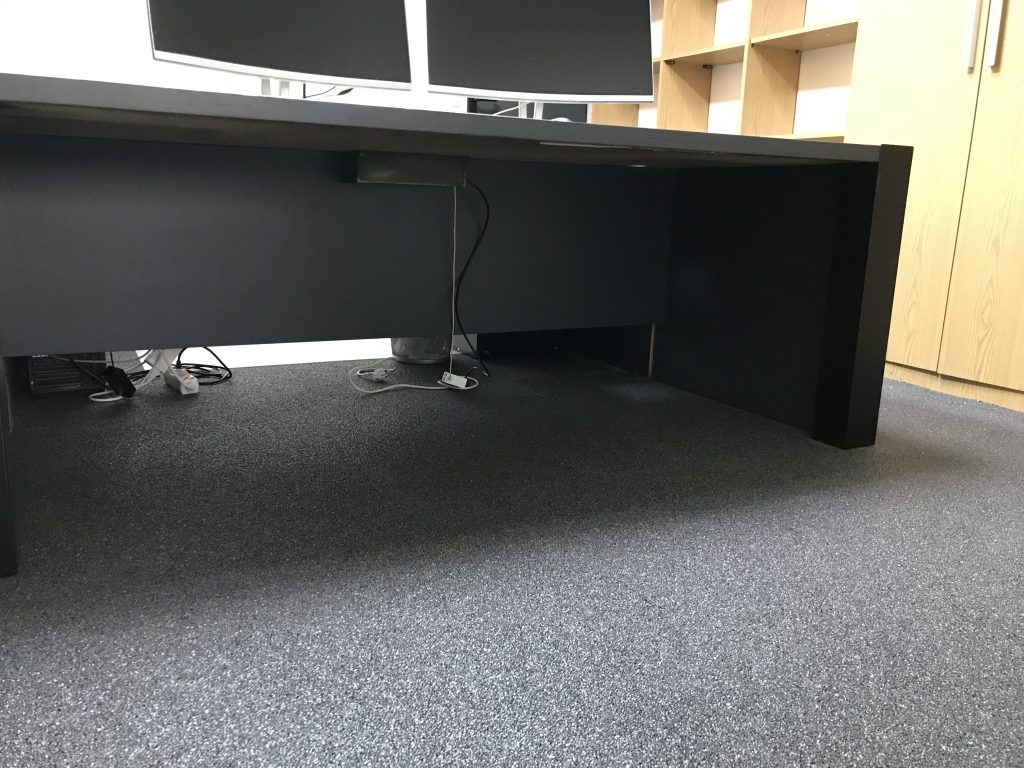
In summary, stone carpet is an attractive and practical floor covering for offices. It offers numerous advantages such as durability, ease of maintenance, hygiene, versatility and a pleasant feel. Anyone looking for a modern alternative to classic floor coverings should consider stone carpeting. You can also use it in the office …
… for a strong appearance!
Non-binding cost estimate and advice
Link collection
- Stone carpet product page
- Worth knowing: Binding agent
- Worth knowing: Cleaning and care
- Worth knowing: Gravel colors
- Worth knowing: Qubo® Painting
- Worth knowing: Coating garages
- Worth knowing Overview
- Contact to Quarzkiesboden Zimmermann
- sz art of airbrush
First and foremost, the area of application determines the pricing. However, the costs depend on many different factors, including
- the type of binder required
-
from the primer
-
the choice of skirting boards, for example if these are also made of quartz gravel
-
from the labor costs of the professional installer
-
the size of the area to be laid
In outdoor areas, the costs are higher because the substrate is sealed and a special binder is used.
In most cases, colorquartz or marble gravel is used for the production of stone carpets. However, there are considerable differences in quality here, for example in the proportion of dust in the material or in the types of marble used.
Colored quartz is available in the following grain sizes:
-
1–2 mm
-
2–3 mm
- 3–4 mm
Marble gravel is available in the following grain sizes:
-
1–4 mm
-
4–8 mm
- 8–15 mm
Of course, the choice of gravel grain size has an effect on the laying thickness of the gravel floor.
The laying thickness of the floor depends on the gravel grain size and the area of application. Normal quartz gravel with a grain size of 2 – 3 mm can be laid indoors – for example in offices – with a thickness of 6 mm.
An installation thickness of 8 mm is used outdoors and on stairs indoors due to the load.
Finally, 10 mm of material is applied to external stairs.
Vertical surfaces such as risers, skirting boards and walls are always laid in 6 mm.
The larger the grain size of the gravel, the higher the installation height of the floor covering. This means that more gravel and additional binder is required per m². The price increases accordingly.
The primer forms the bonding bridge between the building structure and the gravel floor. The material can be applied to almost any substrate, for example tiles, wood, stone, concrete and metal. Different substrates require different preparation steps.
On tiles and metal, for example, a primer is required to give the smooth surface stability during installation.
On porous stone and absorbent screed, the appropriate primer must be used to prevent the binder from being absorbed, which is intended to ensure that the pebbles remain in place.
To coat wooden planks with a gravel floor, the movement of the planks against each other must first be stopped. To do this, the installer first applies a mesh mat to the wooden floor. Once the filler has dried, the gravel floor is applied.
Especially in kitchens and bathrooms, the gravel floor should be fitted with a pore seal for hygienic reasons. It prevents leaked, sticky liquids from penetrating the stone structure. While it is difficult to remove liquids that have penetrated an open floor, the pore seal enables effortless cleaning by wet mopping.
Dogs, cats and co. feel much more comfortable on the textured surface than on smooth floor coverings such as tiles or laminate, as they do not slip on stone carpets. However, it is advisable to cover the floor with a pore seal to ensure an easily wipeable surface.
-
High drainage capacity due to open-pored structure
-
Quick drying in sun and wind
-
Easy to clean and self-cleaning
-
100% frostsicher
-
UV-stabil
- Gentle, massage-like walking comfort when walking barefoot
The most important thing when laying gravel floors in outdoor areas is preparing the substrate. This ensures the durability of the finished floor.
On the one hand, this is because a primed subfloor provides significantly increased adhesion for the filled gravel. On the other hand, a sealing layer keeps rainwater away from the building structure, for example, which supports long-term durability.
Options for sealing building structures are
- Sealing using a resin seal with a sealing membrane
- Sealing using a flex sealing slurry
In order to drain rainwater effectively, the floor covering is laid with a gradient of at least 1.5%.
In outdoor areas, the stone carpet is always laid as an open system to ensure drainage capacity and thus the run-off of rainwater. This makes them 100% frost-proof and therefore ideal as pool surrounds and as a covering for balconies, terraces, entrance areas, outdoor steps and loggias.
We would like to point out that we do not recommend stone carpets in the direct shower area. The reasons for this can be found in the basic structure of the floor and the wet room. Just as the tile adhesive under a tile does not form a completely flat surface without air pockets, pores also remain underneath a sealed stone carpet.
If, after years, a silicone seam leaks and water from a fitting, for example, penetrates between the wall or floor covering and the seal of the building structure, the transparent pore seal reacts with the water and forms white stains. As these occur underneath the seal, they cannot be wiped away or removed by drying.
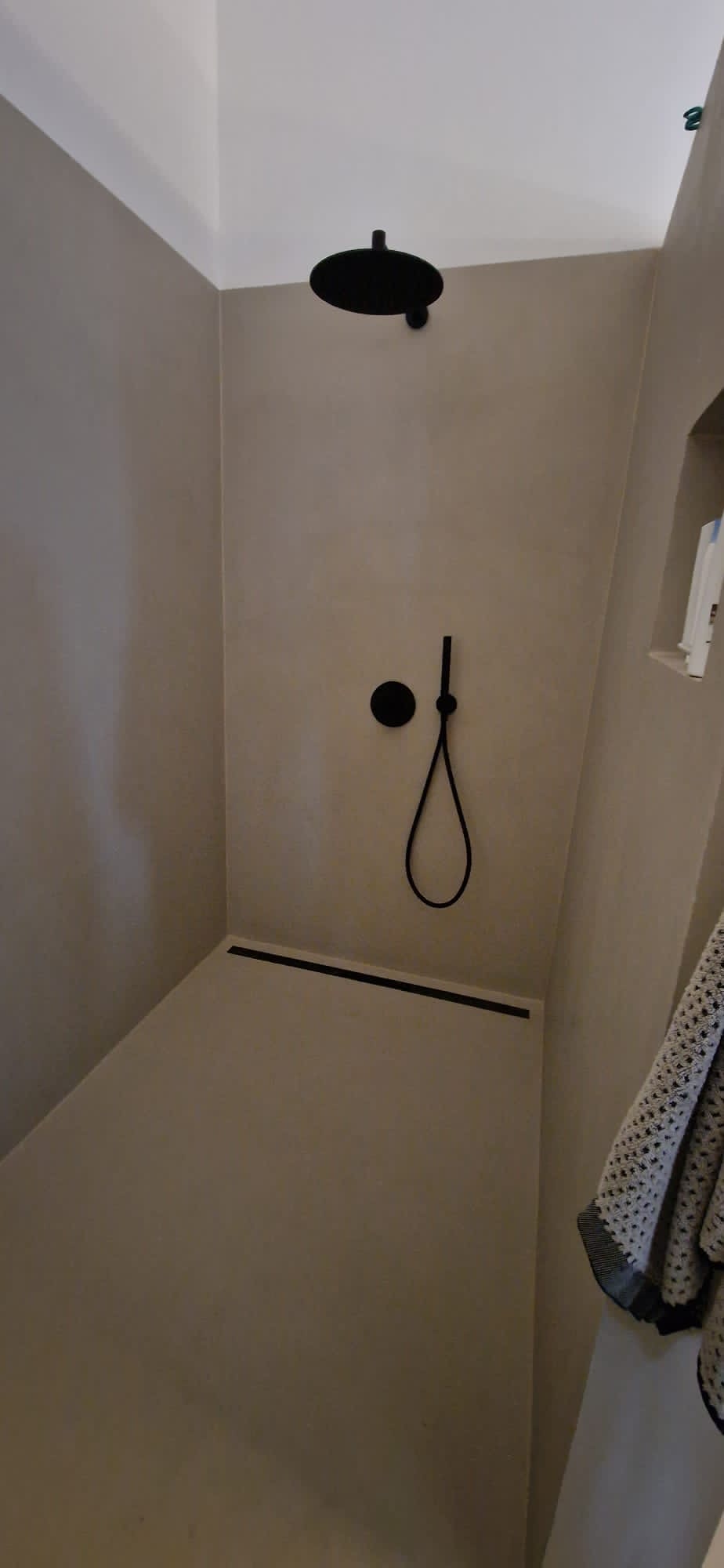
This is why insurance companies do not classify stone carpets as suitable for wet rooms and do not replace such coatings in the event of damage. We therefore recommend microcement coatings for showers. With these, there is no water-bearing layer between the floor covering and the substrate, so there is no risk of moisture penetration. Due to the many customization options for microcement, it can also be combined with stone carpeting. Just get in touch with us.
A staircase coated with gravel already has a slip resistance class of R10 after installation.
The slip resistance class can be increased to R11 or R12 using special sealants.
Depending on the type of staircase, renovations are possible within 3-5 days. Please contact us to discuss the details.
All our gravel floors use natural stones as the base material. This is why many people also refer to gravel coatings as natural stone carpeting.
The gravel is available natural and colored.
A professionally laid floor can practically only be destroyed by chemical stress or under the influence of enormous mechanical forces. It can therefore be assumed that a well-maintained floor will last for several decades.
A separating layer can be worked into the floor coating during installation. This additional step during installation makes it very easy and effortless to remove the gravel flooring.
Mica additives and various gemstones can be added, but this represents a further cost factor.
FAQ
Details and facts, key figures and explanations – here you will find answers to frequently asked questions about our Qubo® coating systems. If any details remain unclear, simply contact us at . We will be happy to advise you personally and promptly.