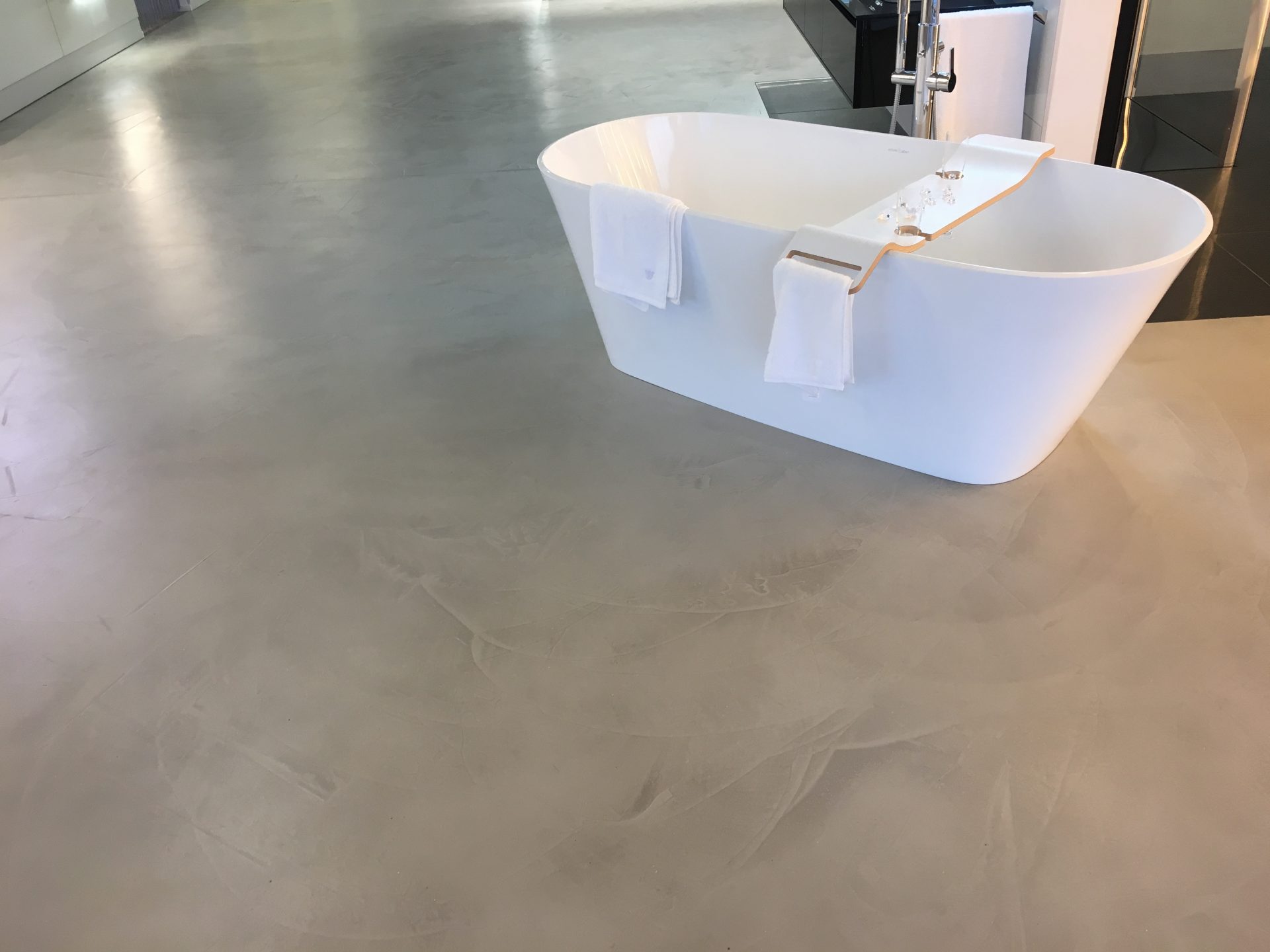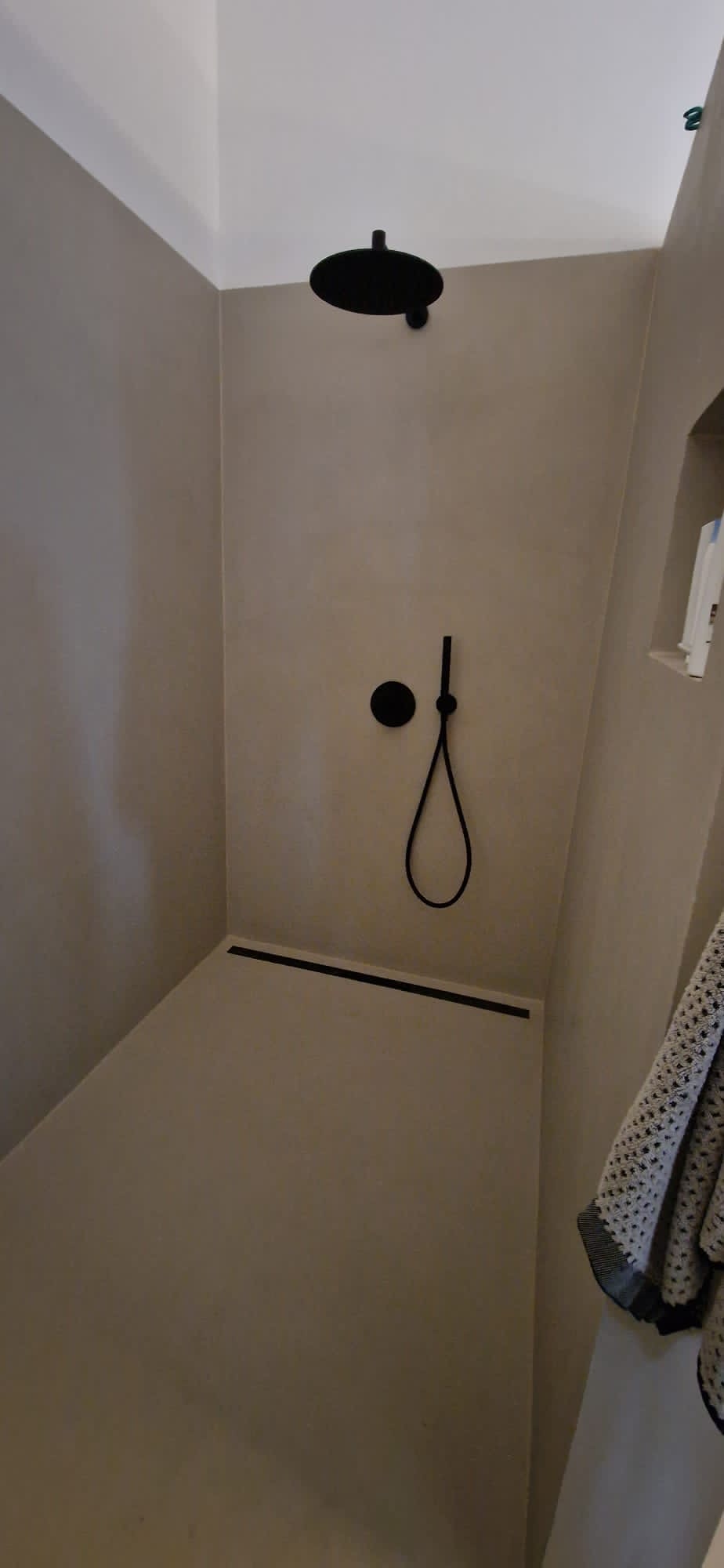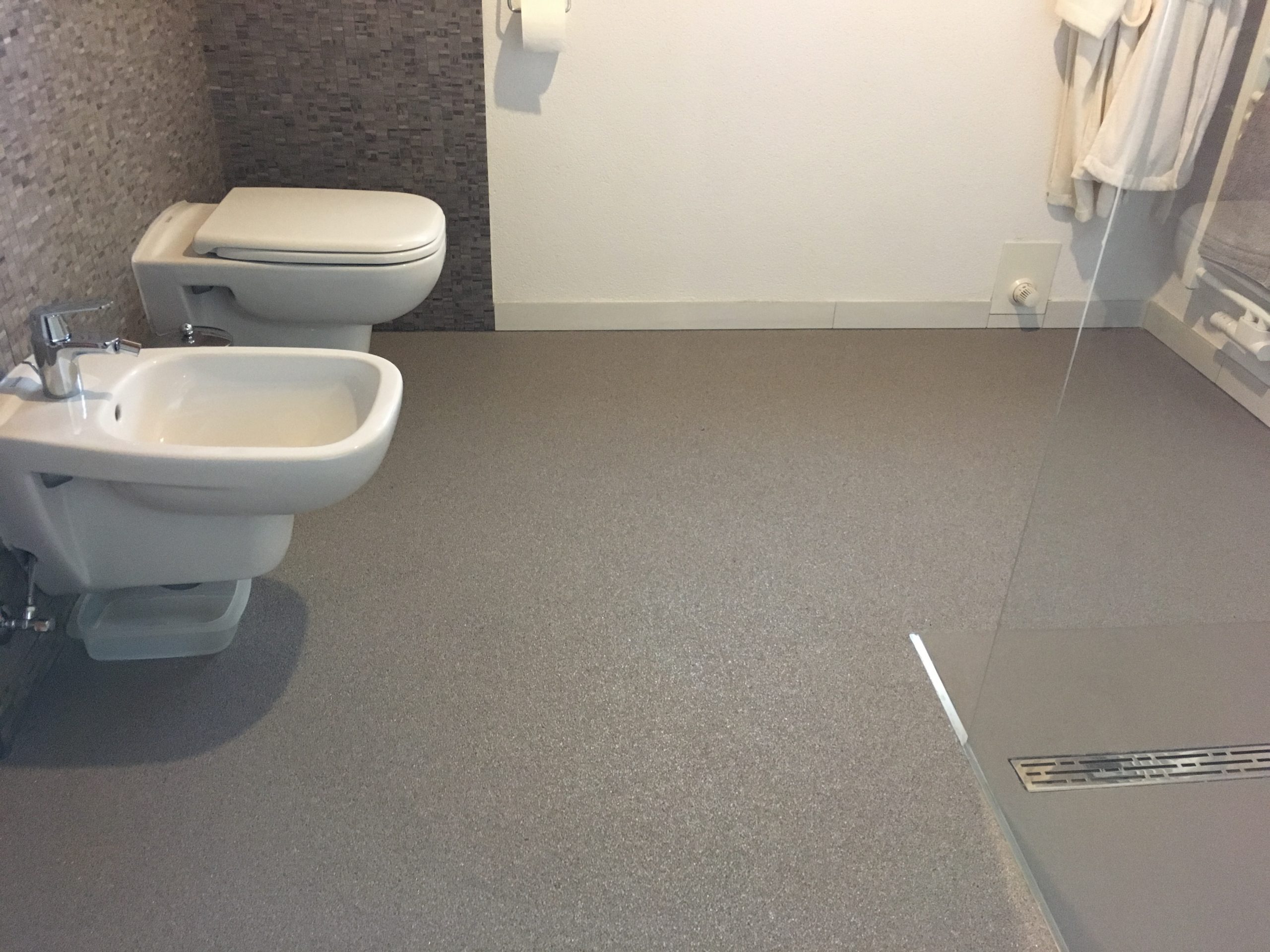

For most services, it’s pretty obvious who to turn to. Want your new living room professionally painted? A master painter is the first choice. Do you need plastering and decorating facades? The plasterer can help. But who do I turn to for a stone carpet ? After all, not every floor layer is also a stone carpet installer. We can tell you how to find the right stone carpet supplier in your region.
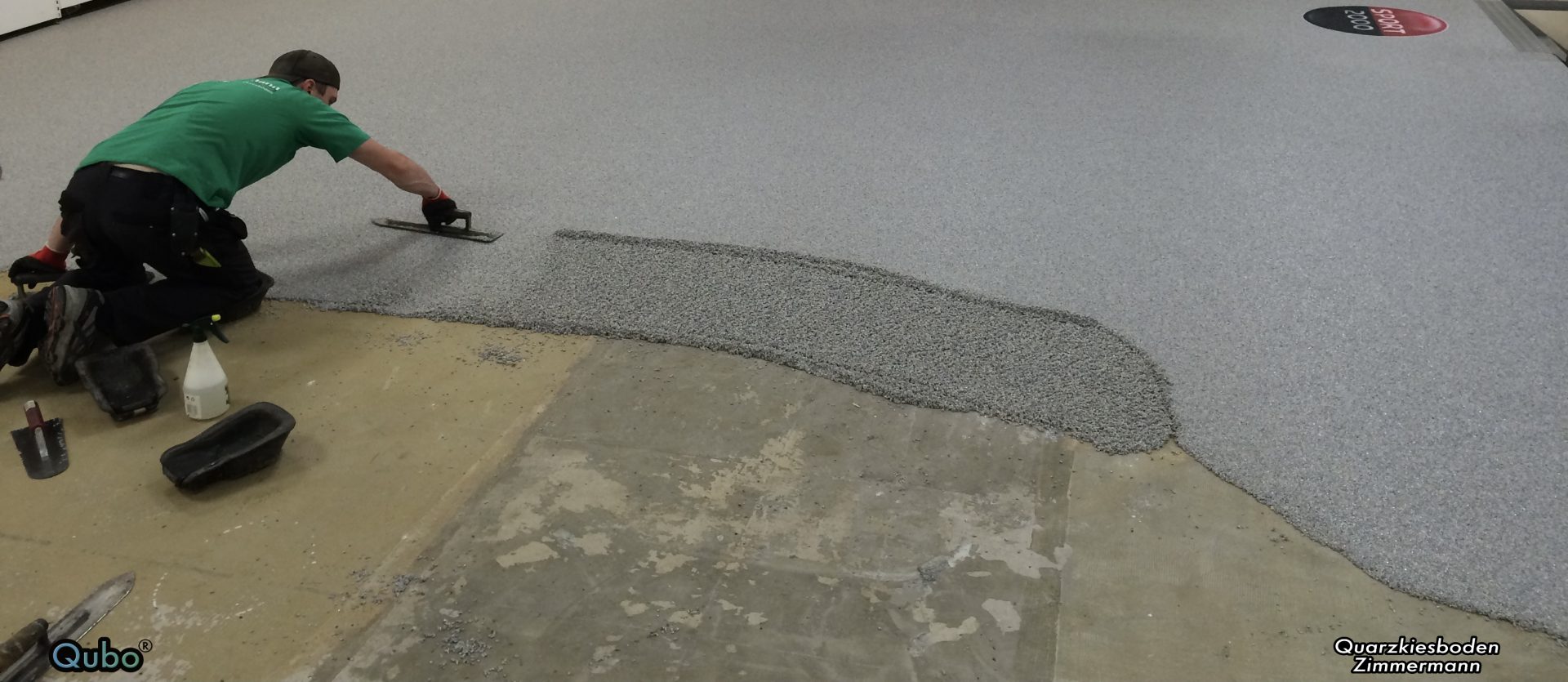
Finding stone carpet suppliers for indoor and outdoor areas How do I find the right stone carpet supplier and installer in my region?
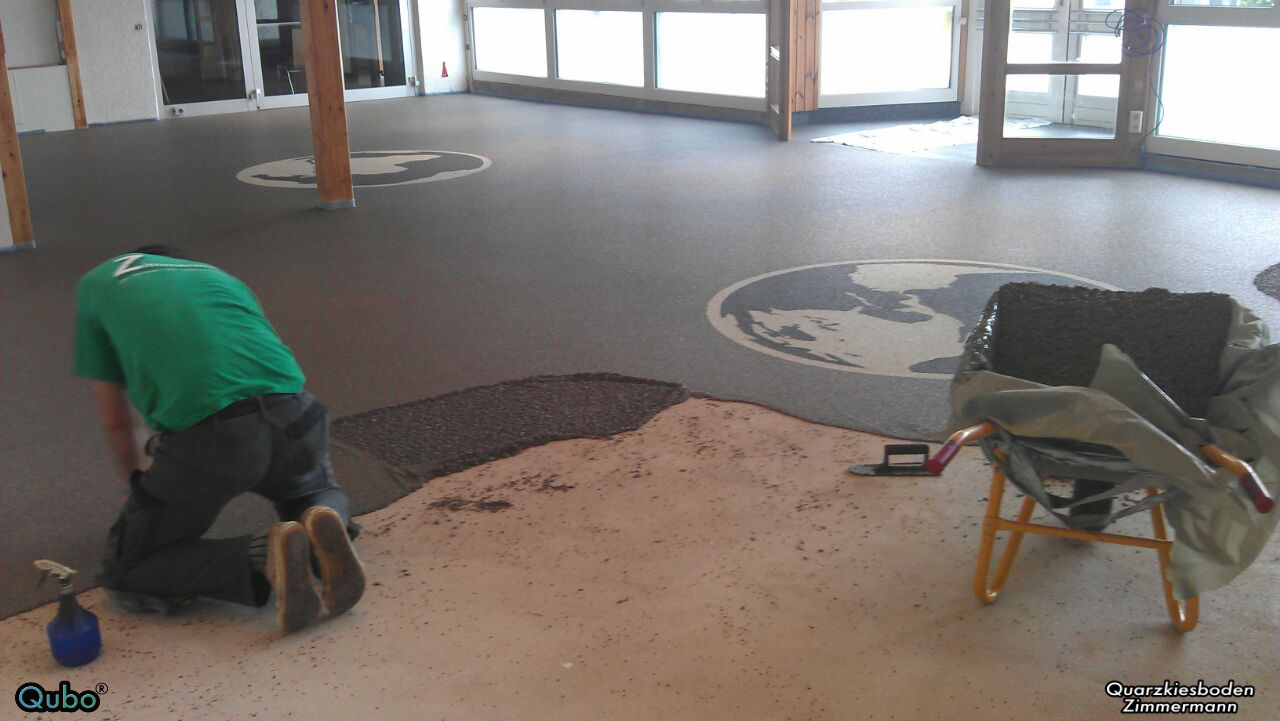
As a trendy floor for indoors and outdoors, stone carpet has become increasingly popular in recent years. Durability, high sustainability, the seamless design and the enormous design freedom are just some of the reasons why this coating system is so popular. This is why there are already installation companies in many parts of Germany. However, as the profession of stone carpet installer is not a classic training occupation, specialist companies are often not found under a unique name. This is also due to the fact that very different craft businesses have included the laying of marble and quartz gravel floors in their existing portfolio. Did you know, for example, that some roofing and painting companies also employ certified stone carpet layers?
Accordingly, when it comes to “finding a stone carpet supplier“, it is not quite so easy to find the right company for your own four walls. A central point of contact that can help customers with all enquiries relating to seamless flooring systems would be of interest here. And that’s exactly who we have! As a wholesaler of materials and tools
for the installation of seamless wall and floor coatings, Quarzkiesboden Zimmermann is in contact with stone carpet suppliers in Germany, Austria and Switzerland.
Regional and national stone carpet suppliers Stone carpet suppliers for Germany, Switzerland and Austria
With over 20 years of experience in laying gravel floors, we have extensive contacts in the industry. This enables our consultants to put you in touch with a specialist company in your region. Many of these installers have already taken part in our training courses and are particularly familiar with the advantages and special features of our Qubo® quality brand. So you can be sure that you will enjoy your wall and floor covering in the long term. If your interest is now piqued or you are also interested in an unusual motif for gravel floors, then contact us now with no obligation!
Why the stone carpet supplier is the better choice Can I lay my gravel floor myself?
Simple floor coverings such as laminate are often laid by homeowners themselves. The question therefore arises as to whether you can also lay gravel floors yourself.
In principle, anyone who is blessed with a certain amount of manual dexterity can of course learn how to lay stone carpets. However, simply acquiring the necessary materials and tools does not provide the necessary experience to create a durable floor covering. And at the latest when it comes to special applications such as creating skirting boards or covering stairs, the necessary expertise is indispensable.
As the amount of material required for this type of floor installation is comparatively high and the skills needed to create smooth, stable surfaces are extremely important, we strongly recommend that you consult a specialist company. They will provide you with the maximum level of security, from advice and the necessary preparation to the professionally laid top floor, so that you will still be happy with your floor in many years to come.
Get off to a flying start with our commission-free order placement Become a successful stone carpet supplier
Perhaps laying the stone carpet in your own four walls is just your first step towards setting up your own business as a stone carpet supplier. Given the constantly increasing demand, this idea is not far-fetched.
In this case, our training courses are a good place to start laying seamless coating systems. As a wholesaler and training centre, Quarzkiesboden Zimmermann offers an all-round carefree package for budding laying professionals. With us
- learn how to handle materials and tools,
- get certified as a publisher and
- Benefit from our nationwide, commission-free order placement.
On request, our professional floor layers will accompany you to your first construction sites and help you get your business off to the best possible start. So you too can soon…
…for a strong appearance!
Non-binding cost estimate and advice
First and foremost, the area of application determines the pricing. However, the costs depend on many different factors, including
- the size of the area to be laid
- the type of binder required
-
from the primer
-
the choice of skirting boards, for example, if these are also made of gravel
-
from the labor costs of the professional installer
In outdoor areas, the costs are higher because the substrate needs to be sealed and the marble gravel needs to be laid with a UV-resistant binder. It is best to seek advice from your stone carpet supplier.
In most cases, stone carpet suppliers use colored quartz or marble gravel for the production of gravel coatings. However, there are considerable differences in quality here, for example in the proportion of dust in the material or the types of marble used.
Mica additives and various precious and semi-precious stones can be added, but this is another cost factor.
Colored quartz is available in the following grain sizes:
-
1–2 mm
-
2–3 mm
- 3–4 mm
Marble gravel is available in the following grain sizes:
-
1–4 mm
-
4–8 mm
- 8–15 mm
Of course, the choice of gravel grain size has an effect on the laying thickness of the gravel floor.
The laying thickness of the floor depends on the gravel grain size and the area of application. Normal quartz gravel with a grain size of 2 – 3 mm can be laid indoors with a thickness of 6 mm.
An installation thickness of 8 mm is used outdoors and on stairs indoors due to the load.
Finally, 10 mm of material is applied to external stairs.
Vertical surfaces such as risers, skirting boards and walls are always laid in 6 mm.
The larger the grain size of the gravel, the higher the installation height of the floor covering. This means that more gravel and additional binder is required per m². The price increases accordingly. Your stone carpet supplier can provide you with more detailed information.
The primer forms the bonding bridge between the building structure and the gravel floor. The material can be applied to almost any substrate, for example tiles, wood, stone, concrete and metal. Different substrates require different preparation steps.
On tiles and metal, for example, a primer is required to give the smooth surface stability during installation.
On porous stone and absorbent screed, the appropriate primer must be used to prevent the binder from being absorbed, which is intended to ensure that the pebbles remain in place.
To coat wooden floorboards with a gravel floor, the movement of the boards against each other must first be stopped. For this purpose, the stone carpet supplier first applies a fabric mat to the wooden floor. Once the filler has dried, the gravel floor is applied.
For hygienic reasons, stone carpet suppliers recommend sealing pores, especially in kitchens and bathrooms. It prevents leaked, sticky liquids from penetrating the gravel floor. While penetrating liquids are difficult to remove from an open floor, the pore closure allows effortless cleaning by wet mopping.
Dogs, cats and the like feel much more comfortable on the structured surface of a gravel floor than on smooth floor coverings such as tiles or laminate, as they do not slip on the gravel structure. However, it is advisable to apply a pore sealant to the floor to ensure an easily wipeable surface.
-
High drainage capacity due to open-pored structure
-
Quick drying in sun and wind
-
Easy to clean and self-cleaning
-
100% frostsicher
-
UV-stabil
- Gentle, massage-like walking comfort when walking barefoot
The most important thing for the installation of gravel floors in outdoor areas is that the stone carpet supplier prepares the substrate correctly. This ensures the durability of the finished floor.
On the one hand, this is because a primed subfloor provides significantly increased adhesion for the filled gravel. On the other hand, a sealing layer keeps rainwater away from the building structure, for example, which supports long-term durability.
Options for sealing building structures are
- Sealing using an epoxy resin seal with sealing membrane
- Sealing using a flex sealing slurry
In order to drain rainwater effectively, the floor covering is laid with a gradient of at least 1.5%.
Talk to your stone carpet supplier for the exact details of your building project.
No, in outdoor areas, the gravel coating is always laid as an open system to ensure drainage capacity and thus the run-off of rainwater. This makes them 100% frost-proof and therefore ideal for pool surrounds and as a covering for balconies, terraces, entrance areas, outdoor steps and loggias.
We would like to point out that we do not recommend stone carpets in the direct shower area. The reasons for this can be found in the basic structure of the floor and the wet room. Just as the tile adhesive under a tile does not form a completely flat surface without air pockets, pores also remain underneath a sealed gravel floor.
If, after years, a silicone seam leaks and water from a fitting, for example, penetrates between the wall or floor covering and the seal of the building structure, the transparent pore seal reacts with the water and forms white stains. As these occur underneath the seal, they cannot be wiped away or removed by drying.
This is why insurance companies do not classify stone carpets as suitable for wet rooms and do not replace such coatings in the event of damage. We therefore recommend microcement coatings for showers. With these, there is no water-bearing layer between the floor covering and the substrate, so there is no risk of moisture penetration. Due to the many customization options for microcement, it can also be combined with a gravel coating. Just get in touch with us.
Yes. A staircase coated with gravel already has a slip resistance class of R10 after installation.
Special sealants can be used to increase the slip resistance class to R11 or R12.
Depending on the design of the staircase, a stone carpet supplier will need 3-5 days for the renovation. In special cases, installation is also possible in an even shorter time. For a more precise determination of the duration of your construction project, simply contact us.
All our gravel floors use natural stones as the base material. This is why many people also refer to stone carpeting as natural stone carpeting.
The gravel is available natural and colored.
Stone carpets are generally known for their durability. In some cases, however, it is desirable to be able to simply remove the floor again after a certain period of time. For this purpose, the stone carpet installer can incorporate a separating layer. This additional step in the installation process enables the gravel floor to be removed easily and effortlessly.
A professionally laid floor can practically only be destroyed by chemical stress or under the influence of enormous mechanical forces. It can therefore be assumed that a well-maintained floor will last for several decades. The durability indoors is even greater than outdoors due to the weather.
FAQ
Details and facts, key figures and explanations – here you will find answers to frequently asked questions about our Qubo® coating systems. If any details remain unclear, simply contact us. We will be happy to advise you personally and promptly.