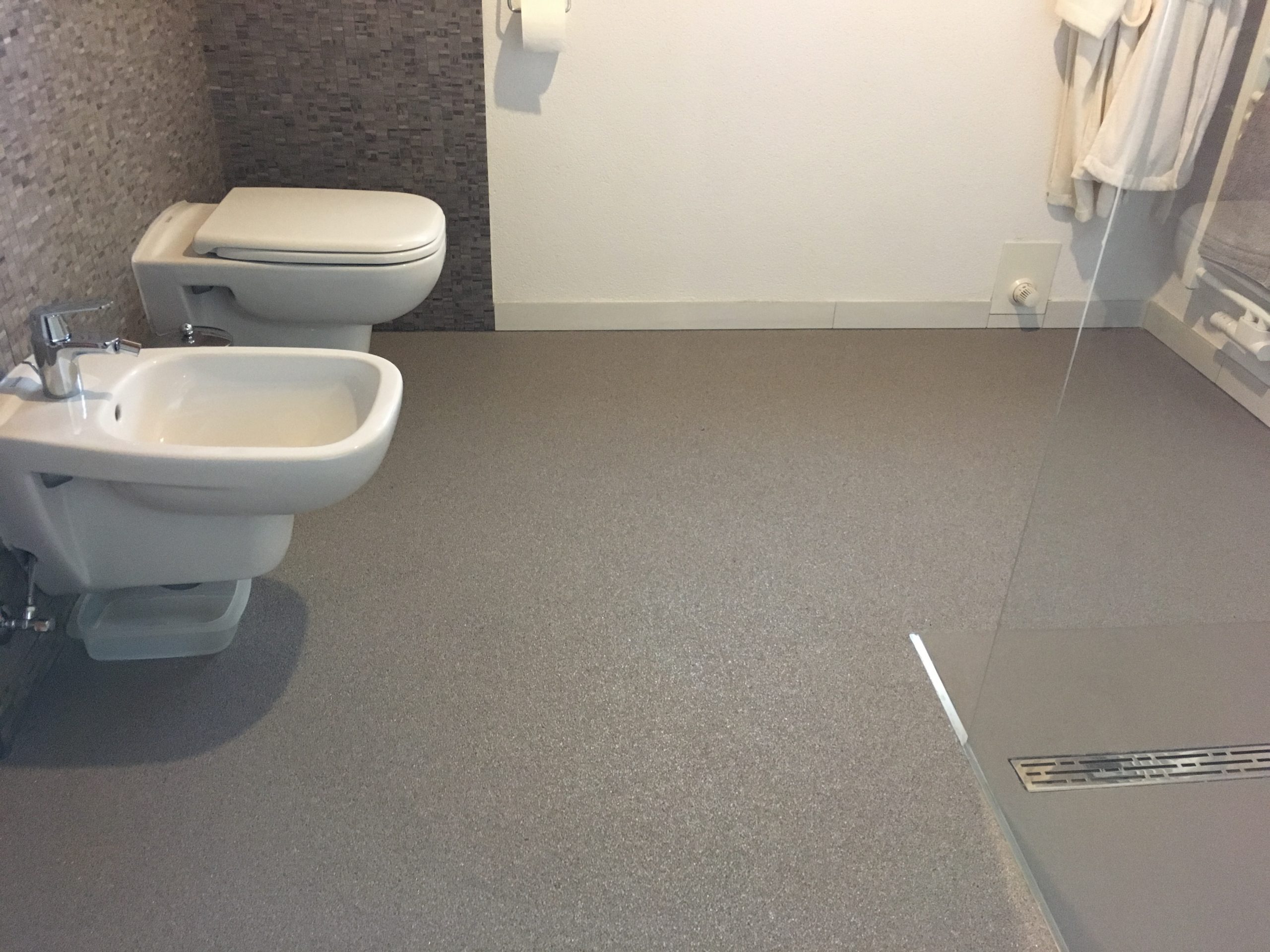
Are you not yet familiar with the different types of stone carpets? From quartz gravel floors to mortar floors and marble gravel to Qubo®Tec, the different coating systems each have their own special advantages and areas of application. Find out more about the four different stone carpet systems here before you buy your stone carpet.
Quartz gravel floor Zimmermann presents 4 different stone carpet systems The right stone carpet system for the right application
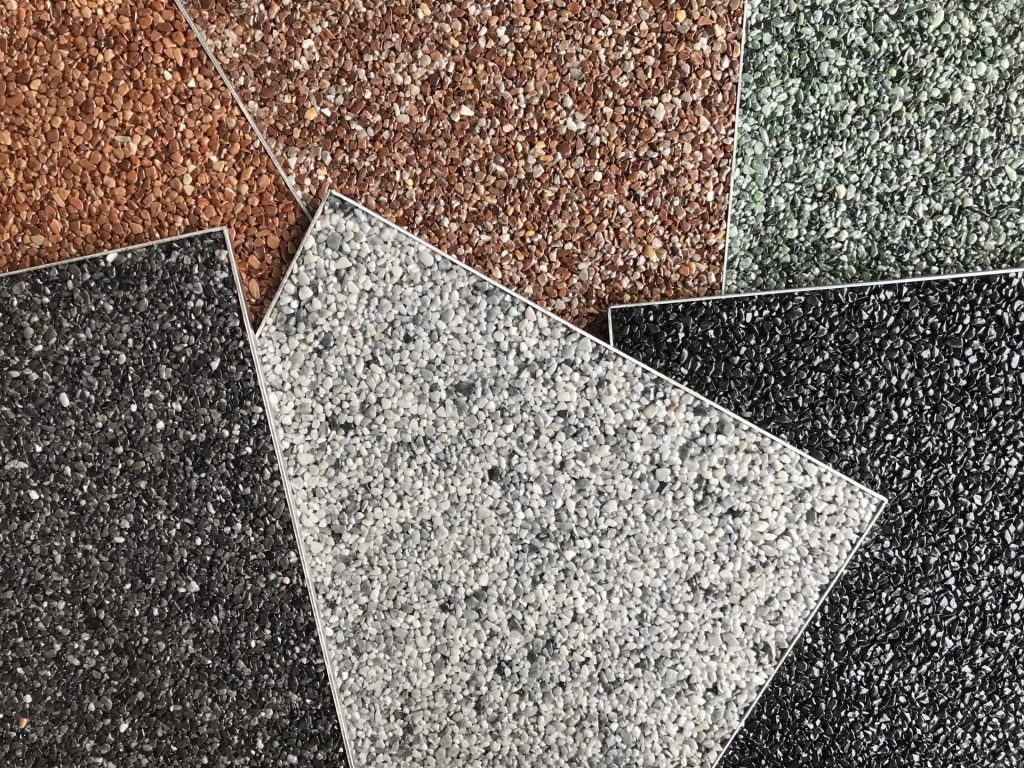
We offer various stone carpet systems for living rooms, conservatories, bathrooms, kitchens, garages, workshops and stores. Special systems are available for industry and for outdoor areas such as balconies, terraces, beer gardens, pool surrounds, parking lots and pedestrian zones. All stone carpet systems consist mainly of different types of gravel, either quartz gravel or marble gravel. They are available in different grain sizes and colors. In addition, admixtures of glass, semi-precious stones and mica effects can be included. Depending on the area of application, some of the many positive properties of the respective stone carpet systems are specifically emphasized.
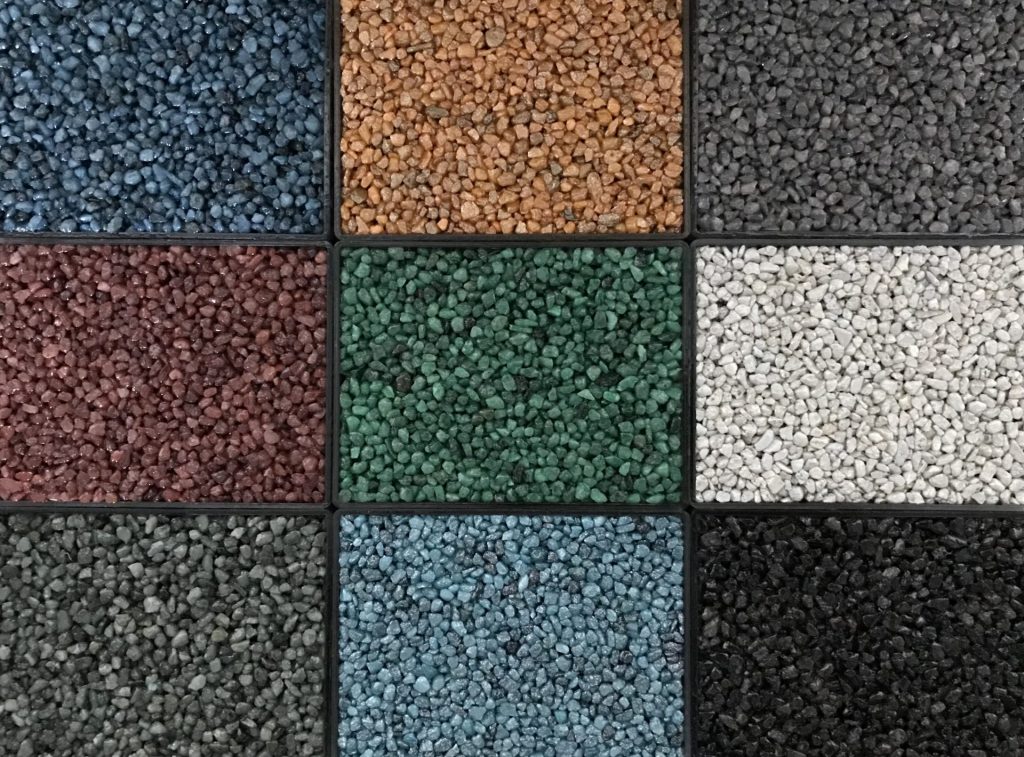
Quartz gravel flooring - the stone carpet system for your home Unlimited design freedom with quartz gravel
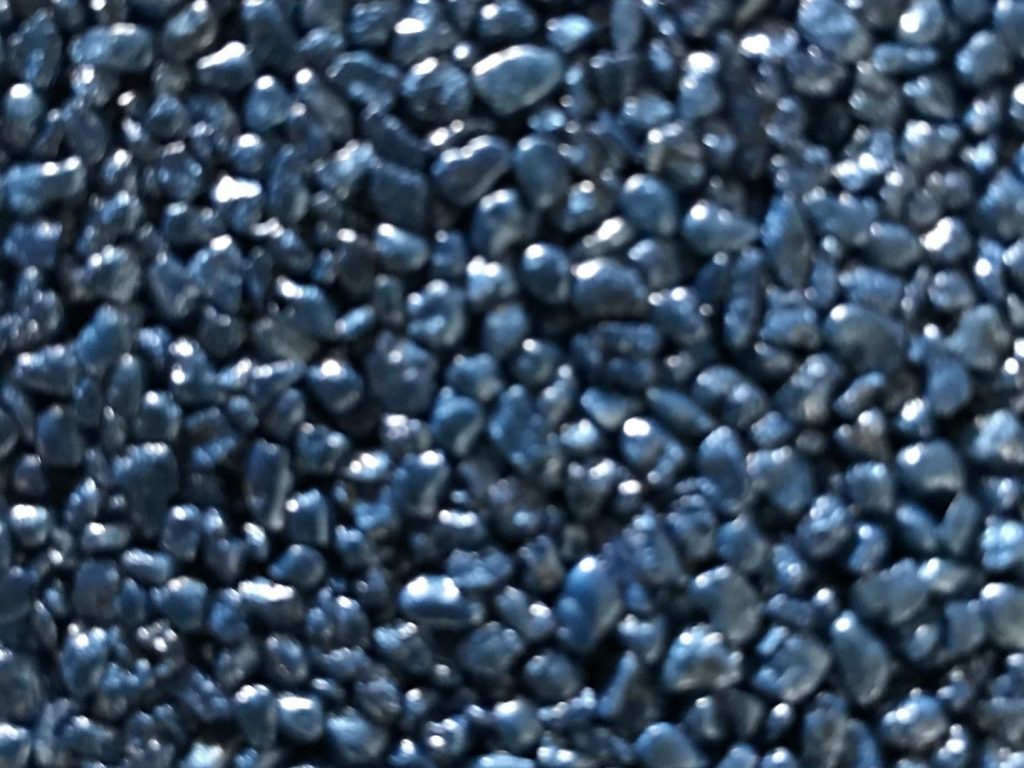
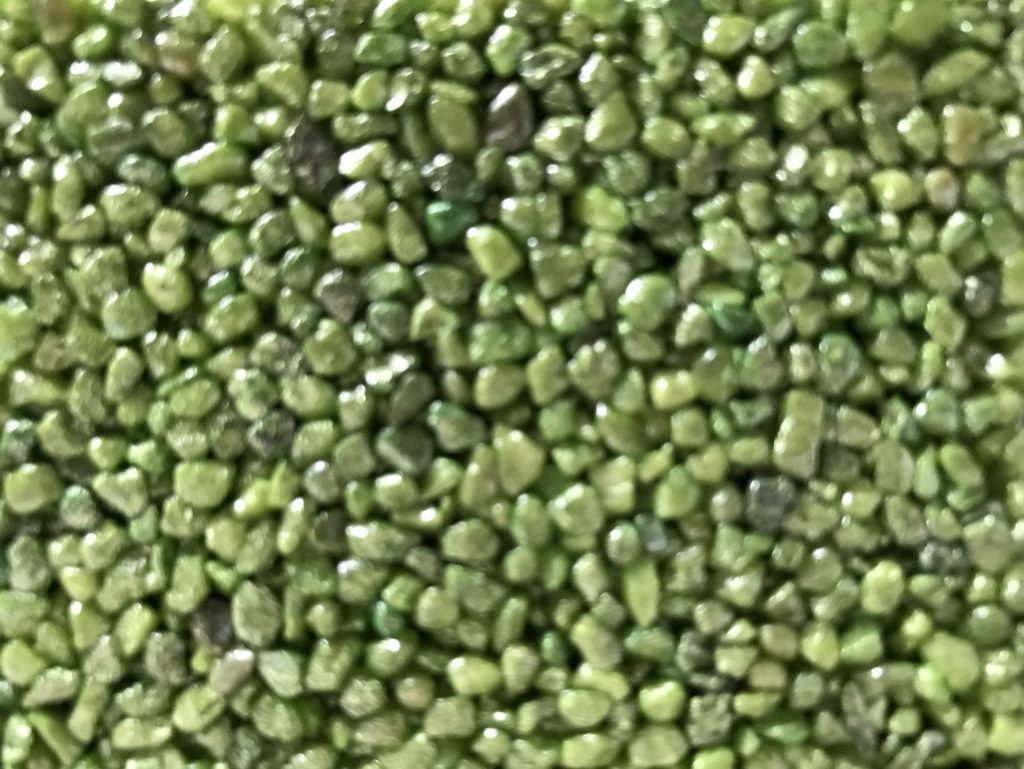
The quartz pebbles that give the quartz gravel floor its name are extracted from the riverbeds of Europe and carefully selected. They are then washed and fire-dried. The gravel is then dyed at a high temperature and given a special coating for flooring. This special process gives the quartz gravel its color and wear resistance. These permanently brilliant colors are one of the most important properties of quartz gravel.
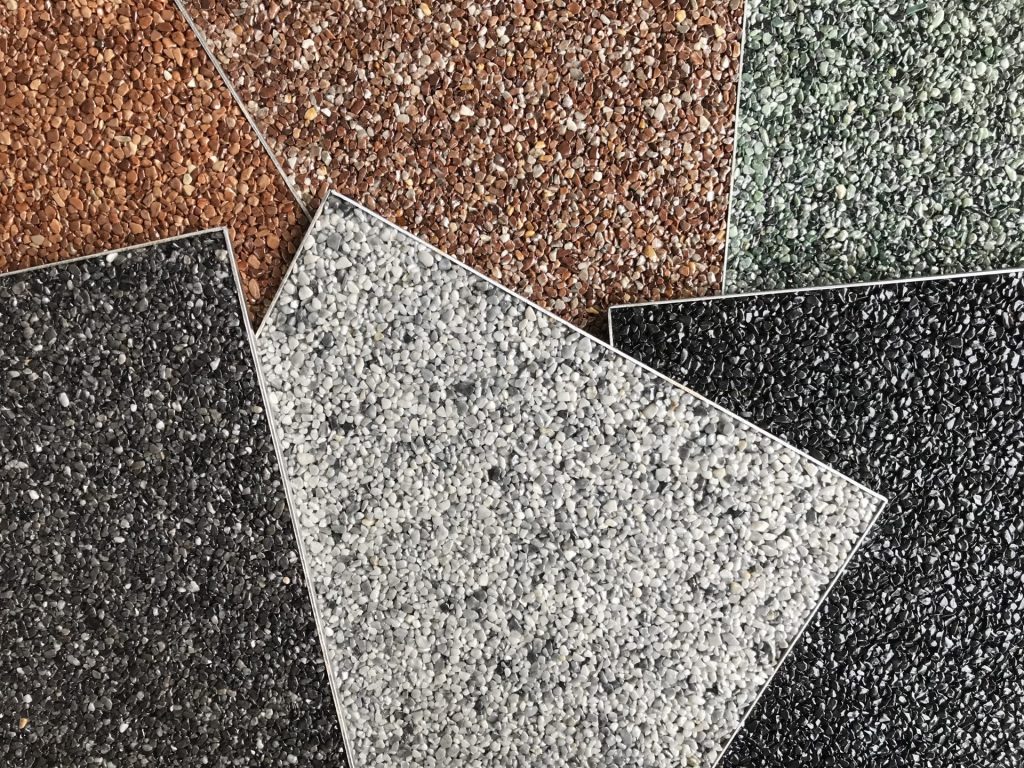
The quartz gravel portfolio includes well over 100 colors. The selection starts with natural stone and ranges from single and double-colored variants to shiny metallic colors and pearlescent gravel varieties. It is possible to combine several colors with each other. This results in unlimited design freedom.
Quartz gravel forms well over 90% of the mass that is later laid as a flooring system. The following grain sizes are used depending on customer requirements:
- 1–2 mm
- 2–3 mm
- 3–4 mm
The remaining part of the stone carpet is the binder. The recommended binders differ depending on the area of application. You can find out more about the individual resins in our “Things to know” section on the subject of
Binders.
Once all the components have been evenly mixed with a whisk, a cement-like mass is produced which can be worked into a smooth floor covering using a laying trowel.
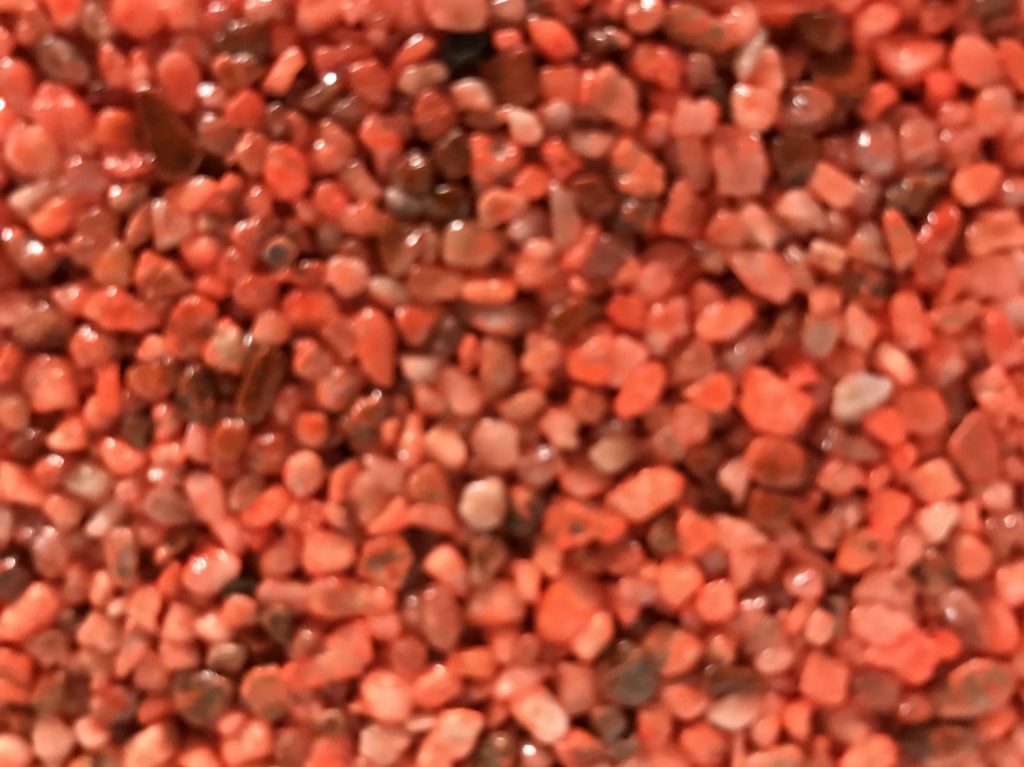
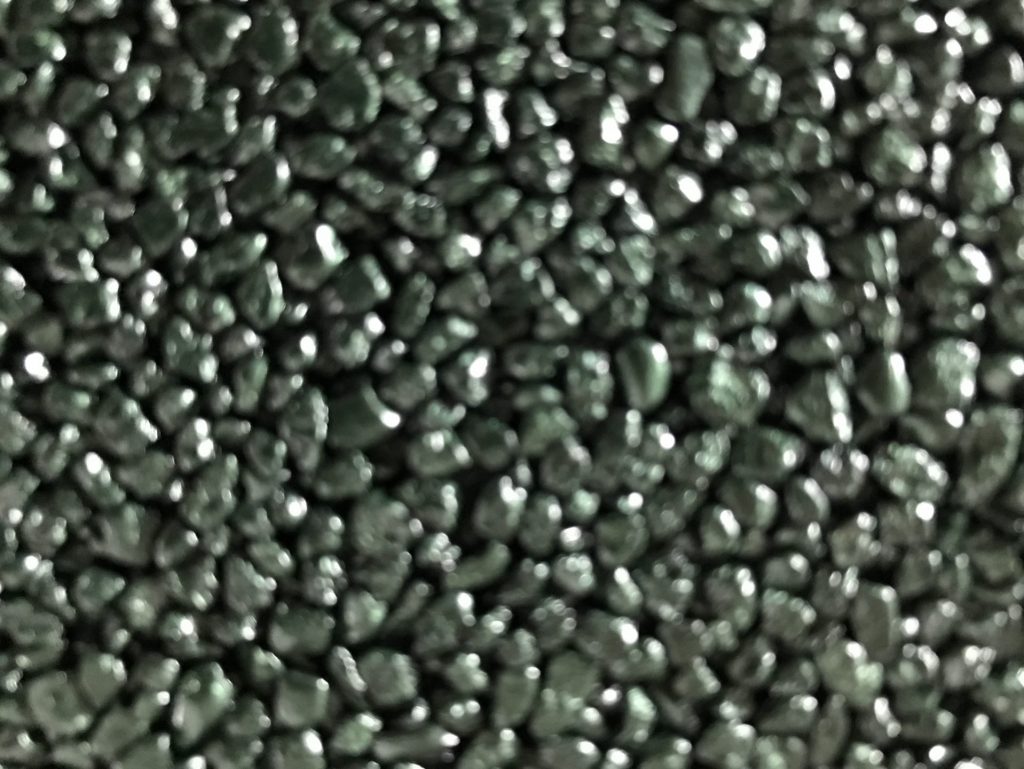
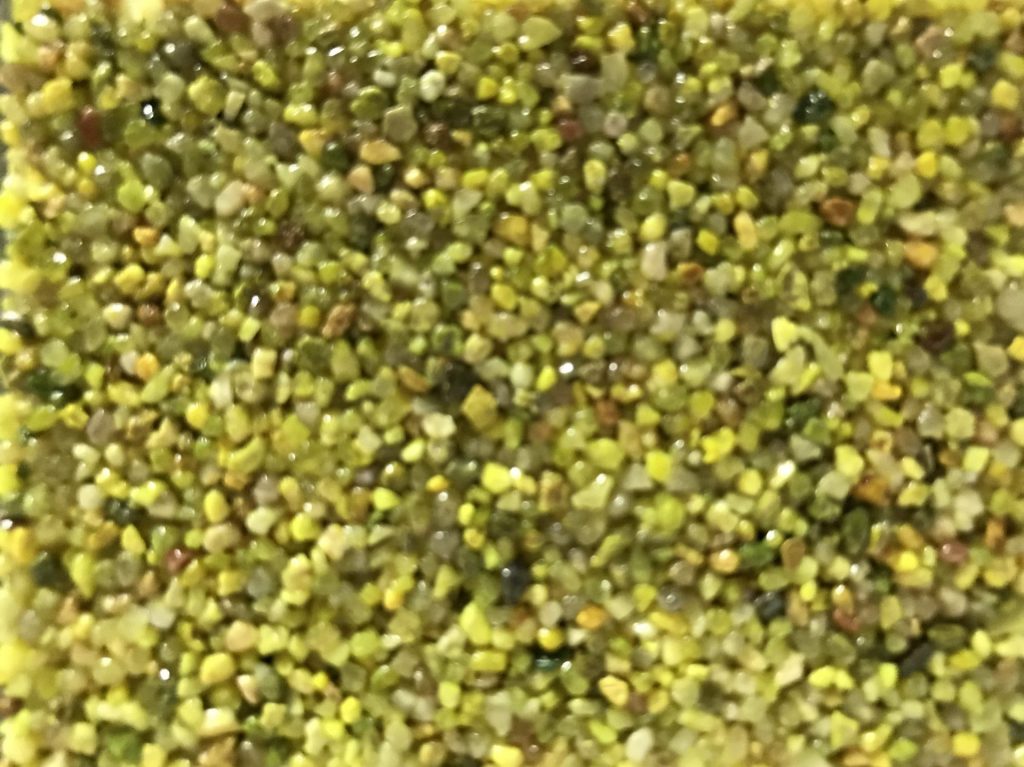
Mortar flooring - the industrial and garage floor under the stone carpet systems Industrial flooring made from the smallest quartz pebbles
This quartz gravel floor was specially developed for industrial and commercial use. However, it is also ideal for use in garages, workshops and commercial kitchens – in other words, for all indoor areas subject to heavy wear and tear.
A mortar base consists of millions of small grains of sand. A distinction is made between different grading curves. They are available in the following grain sizes:
- 0,4 – 0,8 mm
- 0,4 – 1,2 mm
- 0,3 – 2,0 mm
The grains of sand have been worked by erosion in the riverbeds for millions of years. As a result, the quartz pebbles were ground into small round balls. After these have been washed and then fire-dried, the pebbles are colored at high temperatures and given a specially developed coating for flooring. This process ensures a high quality standard for the mortar gravel and makes it particularly resistant to wear and color.
For laying, the quartz is whisked with a binding agent and laid with a smoothing trowel by an expert installer. With this type of floor, a pore seal is generally worked into the surface. This prevents dirt and liquids from penetrating the floor. It is possible to apply a matt or satin finish to provide the floor with additional protection.
Like quartz gravel flooring, mortar flooring is available in many hundreds of colors and color mixtures.

Areas of application for mortar floors
A mortar floor is suitable as a durable and seamless floor covering wherever it has to withstand high mechanical loads, such as in workshops. It is also used where special requirements are placed on chemical exposure and hygiene. These include, for example, production halls and the food industry. Skirting boards can also be realized with mortar material. This requires appropriate profiles and special binders for laying stone carpet on vertical surfaces. This floor covering from the Qubo® range can also be used to create coving as a wall connection. As with the other Qubo® floor coatings, it is also possible to install underfloor heating.
Properties of mortar floors
- Very high mechanical and chemical resistance
- Impact-, shock- and wear-resistant
- Processing on sloping surfaces possible
- High temperature resistance
Qubo®Tec - stone carpet system for driveways, parking lots, walkways and pedestrian zones Drainage-capable outdoor surfacing
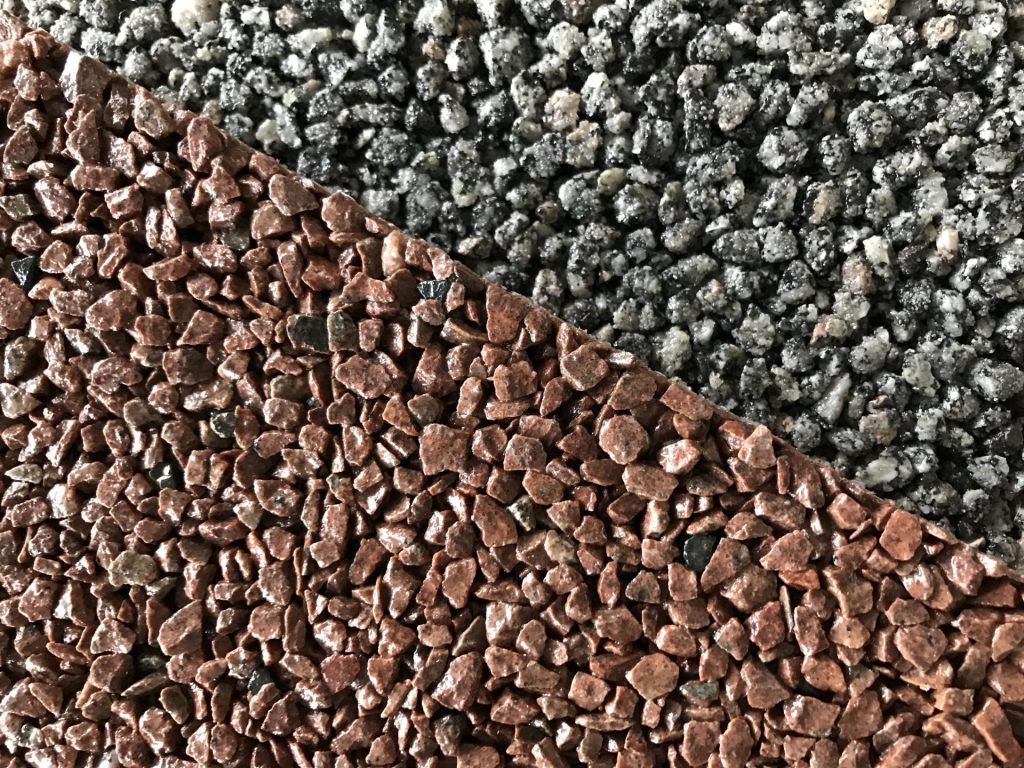
The Qubo®Tec is also made of quartz gravel. It is used in outdoor areas: heavily trafficked driveways and parking lots, daily use by pedestrians, cyclists and cleaning vehicles in pedestrian zones as well as areas that need to be protected from green growth – these are all areas for which you can buy Qubo®Tec.
The Qubo®Tec is also made of quartz gravel. It is used in outdoor areas: heavily trafficked driveways and parking lots, daily use by pedestrians, cyclists and cleaning vehicles in pedestrian zones as well as areas that need to be protected from green growth – these are all areas for which you can buy Qubo®Tec.
Qubo®Tec is made up of quartz gravel of various grain sizes. The majority of the gravel is between 4 and 12 mm. This coarse gravel grain size ensures another important property of Qubo®Tec: its enormous water permeability. Even during heavy rainfall, no puddles form on outdoor surfaces, preventing surfaces from freezing over.
Marble gravel - extracted from Italian quarries Marble gravel floor - the classic for house and balcony
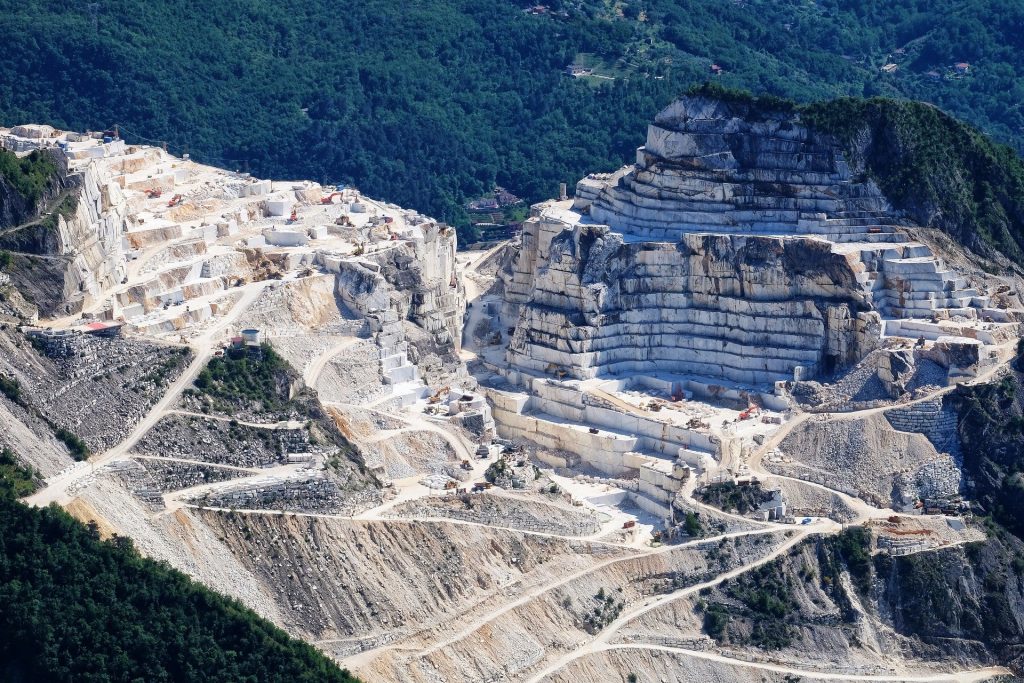
Marble chippings are mainly extracted from Italian quarries. For processing into stone carpet, it must first be artificially rounded to break the sharp edges. This makes the marble gravel easier to lay and easier to compact. This ensures greater stability and a uniformly beautiful look.
After rounding, the marble gravel is cleaned in several washes to remove sand and dust particles.
The cleanliness of the stones has a major influence on the quality of the material: only clean gravel without a large amount of dust gives the marble gravel floor its clear, radiant and color-intensive appearance. Marble in all its nuances is naturally colored throughout. This enables completely natural-looking surfaces in colors ranging from Nero Ebano black to Carrara white and Verde Alpi green to Rosso Verona red.
The marble gravel is available in the following grain sizes:
- 1–4 mm
- 5 – 8 mm
Some of the systems presented can be provided with a pore seal. Special sealants can also be used depending on the intended use. We will find the right stone carpet system for your building project in a personal consultation. Simply fill out the form below. You will immediately receive a non-binding cost estimate. With our stone carpet systems you …
… for a strong appearance!
Non-binding cost estimate and advice
First and foremost, the area of application determines the pricing for the respective stone carpet systems. However, the costs depend on many different factors, including
- the type of binder required
-
from the primer
-
the choice of skirting boards, for example, if these are also made of gravel
-
from the labor costs of the professional installer
-
the size of the area to be laid
In outdoor areas, the costs are higher because the substrate needs to be sealed and a stone carpet system with a UV-resistant binder needs to be laid.
In most cases,
Colorquarz
or
Marmorkies
are used for laying stone carpet systems. However, there are considerable differences in quality here, for example in the dust content of the material or the types of marble used.
Mica additives and various precious and semi-precious stones can be added, but this is another cost factor.
Colored quartz is available in the following grain sizes:
-
1–2 mm
-
2–3 mm
- 3–4 mm
Marble gravel is available in the following grain sizes:
-
1–4 mm
-
4–8 mm
- 8–15 mm
Of course, the choice of gravel grain size has an effect on the laying thickness of the gravel floor.
The laying thickness of the floor depends on the gravel grain size and the area of application. Normal gravel with a grain size of 2 – 3 mm can be laid indoors with a thickness of 6 mm.
An installation thickness of 8 mm is used outdoors and on stairs indoors due to the load.
Finally, 10 mm of material is applied to external stairs.
Vertical surfaces such as risers, skirting boards and walls are always laid in 6 mm.
The larger the grain size of the gravel, the higher the installation height of the floor covering. This means that more gravel and additional binder is required per m². The price increases accordingly.
The primer forms the bonding bridge between the building structure and the gravel floor. The material can be applied to almost any substrate, for example tiles, wood, stone, concrete and metal. Different substrates require different preparation steps.
On tiles and metal, for example, a primer is required to give the smooth surface stability during installation.
On porous stone and absorbent screed, the appropriate primer must be used to prevent the binder from being absorbed, which is intended to ensure that the pebbles remain in place.
To coat wooden planks with a gravel floor, the movement of the planks against each other must first be stopped. To do this, the installer first applies a mesh mat to the wooden floor. Once the filler has dried, the gravel floor is applied.
For reasons of hygiene, the stone carpet should be fitted with a pore seal, especially in kitchens and
bathrooms
. It prevents leaked, sticky liquids from penetrating the gravel floor. While it is difficult to remove liquids that have penetrated an open floor, the pore seal enables
effortless cleaning
by wet mopping.
Dogs
, cats and co. feel much more comfortable on the textured surface of a gravel floor than on smooth floor coverings such as tiles or laminate, as they do not slip on stone carpets. However, it is advisable to cover the floor with a pore seal to ensure an easily wipeable surface.
terrace
is the durable alternative to other floor coverings. The system creates a non-slip floor that is not only visually appealing, but also 100% frost-proof and UV-resistant. This means that our
Qubo® quartz gravel
can be used outdoors without any problems. Their special coating gives the quartz pebbles additional protection from the sun’s rays.
marble gravel
, which is also suitable for outdoor use, comes from Italian quarries and is naturally lightfast.
-
High drainage capacity due to open-pored structure
-
Quick drying in sun and wind
-
Easy to clean and self-cleaning
-
100% frostsicher
-
UV-stabil
- Gentle, massage-like walking comfort when walking barefoot
The most important thing when laying gravel floors in outdoor areas is preparing the substrate. This ensures the durability of the finished floor.
On the one hand, this is because a primed subfloor provides significantly increased adhesion for the filled gravel. On the other hand, a sealing layer keeps rainwater away from the building structure, for example, which supports long-term durability.
Options for sealing building structures are
- Sealing using an epoxy resin seal with sealing membrane
- Sealing using a flex sealing slurry
In order to drain rainwater effectively, the floor covering is laid with a gradient of at least 1.5%.
No, in outdoor areas, the stone carpet is always laid as an open system to ensure drainage capacity and thus the drainage of rainwater. This makes them 100% frost-proof and therefore ideal as
pool surrounds
and as a covering for balconies, terraces, entrance areas, outdoor steps and loggias.
No, we strongly advise against this and recommend Qubo® microcement instead. More information can be found in our section Things to know about stone carpet for bathrooms & saunas.
stairs
can be easily renovated both indoors and outdoors. If you apply a gravel coating to your old stairs, you will get a new design without having to invest in a new staircase. Renovation is carried out without any chiseling or demolition work. Staircase renovation significantly reduces or even completely eliminates noise. Of course, stone carpeting is also ideal for new staircases and entrance areas.
Depending on the design of the staircase, the renovation takes 3-5 days. In special cases, installation is also possible within an even shorter time. For a more precise determination of the duration of your construction project ,
simply contact us at
.
All our stone carpet systems use natural stones as the base material. This is why many people also refer to the floor covering as natural stone carpeting.
The gravel is available natural and colored.
FAQ
Details and facts, key figures and explanations – here you will find answers to frequently asked questions about our Qubo® coating systems. If any details remain unclear, simply contact us at . We will be happy to advise you personally and promptly.
Link collection
- Stone carpet
- Product page
- Worth knowing
- Quartz gravel floor Product page
- Qubo®Tec product page
- Worth knowing: Qubo® Painting
- Manufaktur sz art of airbrush